
Criminal Case: Paris
Pretty SimpleAdventure
4.71.30K Reviews
- Version
- 2.45.1
- Installs
- 1.00M
- Age Rating
- Teen
Screenshots



Our Review of Criminal Case: Paris
 Analysis by Appyee
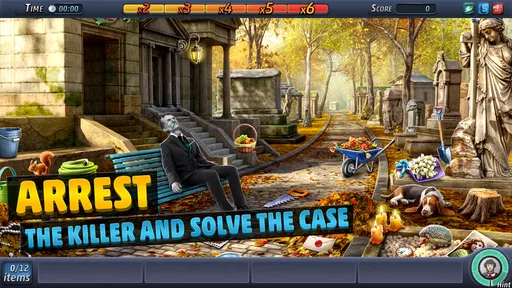
I approached Criminal Case: Paris expecting a light murder-mystery game for short sessions, and that is still the clearest way to understand it. This is a free adventure game from Pretty Simple built around investigating cases, examining scenes, and working toward answers rather than mastering fast controls or complex combat. The Paris setting gives the familiar investigation formula a distinct mood, while the case structure makes it easy to play in small pieces.
My overall impression is positive, especially if you enjoy hidden-object investigation and story-led puzzles more than action. It feels designed for the person who wants something to do during a quiet break, on a commute, or before bed. It is less convincing for anyone looking for a fully open detective simulation, a deep role-playing game, or a completely uninterrupted experience. The free entry point is attractive, but the presence of in-app purchases means I would approach progression with a little patience.
How the Paris investigation works in everyday play
The basic appeal is straightforward: you enter a murder investigation, inspect locations, search for useful clues, and use what you find to move the case forward. That structure gives each session a clear purpose. Instead of wandering through a large world wondering what to do next, I usually know whether I am looking for evidence, checking a lead, or preparing for the next part of the story.
That focus is one of the game’s strongest qualities. A typical session can fit into a short break because the investigation is divided into recognizable activities. I can play for a few minutes, stop, and return later without needing to remember a complicated control scheme. The game’s adventure classification is accurate, but it is a particularly accessible kind of adventure: the emphasis is on observation, deduction, and following a case rather than on reflexes.
The city backdrop also matters. Paris is not just a label placed over a generic puzzle format; it gives the cases a more specific atmosphere than a nameless setting would. I found that the location helped the investigation feel like a connected journey, even when the moment-to-moment activity remained familiar. Players who enjoy crime fiction, visual clue hunting, and episodic storytelling will probably understand the appeal quickly.
At the same time, the central loop can become repetitive if you need constant mechanical variety. Searching scenes is satisfying when I am in the right mood, but it does not suddenly become a different genre after several sessions. The game works best when I treat it as a steady detective pastime rather than a huge adventure with endless new systems.
What makes the first sessions approachable
I like that the premise does not demand a long tutorial investment before the investigation becomes understandable. The goal is easy to grasp, and the visual nature of the clues makes the game more welcoming than a text-heavy mystery. Someone who rarely plays mobile games can pick it up without first learning a complicated interface or a large set of character abilities.
That accessibility also makes it suitable for shared play in a casual setting. I can imagine handing the phone to a friend and discussing where a clue might be hidden, although it remains a single-player-style experience rather than a dedicated cooperative game. It is the sort of title that can create a small conversation around a puzzle without requiring both people to install or learn anything.
One useful habit is to slow down during scene searches instead of tapping randomly. I get better results by scanning the whole image in sections, checking unusual shapes, and only then using any assistance the game makes available. This is not merely a way to improve accuracy; it also reduces the frustration that comes from spending resources to solve something I could have noticed myself.
Where the pace starts to feel heavier
The game’s perceived speed depends heavily on how you play. A single investigation step can feel brisk when I am focused, but repeated searches, waiting between actions, or returning to related parts of a case can make a longer session feel slower. That is not necessarily a technical problem. It is more a consequence of a progression-based mystery format that expects the player to move through several linked activities.
During heavier use, I would not treat it like a game meant for nonstop marathon sessions. The repeated visual searching can tire my attention before it tires the device. I get more enjoyment by completing a small objective, putting the game down, and returning when I actually want another clue hunt. This rhythm also helps preserve the mystery because I am less likely to rush through scenes while distracted.
Players should also understand the difference between perceived slowness and genuine instability. If a case feels gradual, that may simply be the intended pacing. If the app stops responding or loses progress, that is a separate concern. In my assessment, the game is better suited to measured progression than to someone demanding instant movement from one major revelation to the next.
Handling resource pressure without spoiling the fun
Because this is a free game with optional purchases ranging from $0.99 to $99.99 per item, I would recommend deciding early how you want to play. The patient approach is the safest one: inspect scenes carefully, avoid spending help casually, and accept that progress may be more enjoyable when it is earned over several short visits. The faster approach may appeal to players who dislike waiting, but it can make the free structure feel more noticeable.
This is one of the most important trade-offs in the whole experience. The game is easy to start without paying, yet the temptation to accelerate progress can change how relaxed the investigation feels. I would not recommend it to a child using an unsupervised device, even though the listed content rating is Teen, because purchase controls and crime themes deserve an adult’s attention.
A practical routine is to play the first part of a session naturally, then stop before frustration encourages an impulsive purchase. If I am stuck, I revisit the scene with a fresh scan rather than immediately treating assistance as the solution. That approach makes the detective work feel more personal and keeps the optional spending from dominating the experience.
Reliability, device demands, and returning to a case
I find that returning to a case works best when I treat it as a fresh, focused search rather than trying to remember every detail from my last visit. A quick look at the current objective helps me choose what to do next and avoid spending assistance in a hurry. That small reset is also a useful way to judge whether the game’s measured pace fits the breaks I actually have.
What I expect from ordinary sessions
Criminal Case: Paris is currently listed as version 2.45.1 and supports devices running Android 7.0 or later. Those details make it approachable for people who are not using the newest phone, although compatibility alone does not guarantee identical performance on every device. Scene-heavy games can feel different depending on available storage, background activity, screen size, and the general condition of the phone.
In practical terms, I would expect the game to be comfortable on a reasonably maintained compatible device, particularly when used for the short sessions it encourages. I would close demanding apps in the background if the phone is older or already struggling. That is not because the game should automatically be considered demanding, but because reducing competing activity is a sensible way to make any visual mobile game feel more responsive.
Screen size affects the experience more than I first expected. On a larger display, searching a crowded scene is easier because small details are less cramped. On a compact phone, the same investigation may require more zooming or careful tapping, and that can make the game feel slower even when the app itself is behaving normally. Players with eyesight or precision concerns should take this into account before committing to long sessions.
Stability and the question of recovery
For me, reliability in a case game means more than avoiding crashes. It also means being able to return to an investigation without feeling that a brief interruption has ruined the flow. This format benefits from clear, repeatable objectives because I can usually reorient myself by checking the current case rather than reconstructing an entire plot from memory.
I still recommend treating interruptions carefully. If the app becomes unresponsive, I would wait briefly before tapping repeatedly, then restart it cleanly if needed. Rapid repeated input can make a stalled interface feel worse and may create confusion about which action registered. When returning after a break, I would first look at the active investigation and review the immediate objective before spending any help or moving on.
That recovery habit is especially useful for everyday play. Imagine starting a case while waiting for an appointment, then being called away before finishing a scene. The best return point is not a frantic attempt to remember every clue; it is a quick check of the current task followed by a deliberate re-scan. This makes the game more forgiving of interruptions than an action title where missing a moment can end the whole run.
Who should use it and who should skip it
I would recommend this game to someone who likes casual mystery stories, hidden-object scenes, and a steady stream of small investigative goals. It is also a good fit for players who want an adventure they can sample for free before deciding whether the style suits them. The strong average rating of 4.7 from around 27 thousand ratings, together with more than a million installs, suggests that the format has found a substantial audience, though popularity does not remove the need to check whether its pacing matches your taste.
I would be more cautious about recommending it to players who want a premium experience with no purchase pressure, or to anyone who expects every clue to be solved through complex logic. The game’s appeal comes from observation and progression, not from the kind of elaborate deduction found in a traditional point-and-click adventure or a long-form detective simulation. If you prefer real-time action, competitive play, or a large explorable map, another adventure game would probably suit you better.
Compared with a conventional hidden-object game, this one has a stronger case-driven identity and a more persistent sense of investigation. Compared with a premium narrative adventure, it is easier to access but less likely to feel completely uninterrupted. Compared with a pure puzzle game, its story and crime-solving framing give the searches more context, although the underlying activity may still feel familiar after extended play.
My performance verdict
My performance verdict is that the game is best understood as a controlled, low-pressure mobile investigation rather than a speed-focused adventure. It should appeal to players who value short, repeatable sessions and a clear objective. The main performance-related limitation is not a need for demanding reflexes; it is the possibility that a longer session feels mentally repetitive or that progression feels less immediate when I refuse to spend.
On a compatible device, I would prepare for it by keeping the phone reasonably clear of background tasks, using a screen size that makes clue hunting comfortable, and playing in focused intervals. Those simple choices matter because the game’s experience is built around visual attention. A small display or a busy phone can make the investigation feel more cumbersome than it needs to be.
The free price makes trying it straightforward, while the Teen rating and optional purchases mean it is worth setting expectations before handing it to a younger player. I also appreciate that the game does not require me to become an expert immediately. I can learn its rhythm through a few cases, decide whether the repeated searches remain enjoyable, and then choose whether patience or optional spending fits my style.
After spending time with it, I see Criminal Case: Paris as a dependable choice for casual crime-solving rather than a universal recommendation. Its best moments come when I am relaxed, paying attention to a scene, and enjoying the small satisfaction of connecting one clue to the next. Its weaker moments arrive when I want rapid progress, deep deduction, or a completely frictionless premium structure.
My recommendation is simple: try it if you want a free Paris-set adventure that turns murder investigations into manageable visual puzzles. Play slowly, protect your attention, and do not rush to buy help when a second careful search may solve the problem. If that rhythm sounds enjoyable, the game has enough atmosphere and accessible case structure to become a pleasant regular diversion.
Verdict
Strengths of Criminal Case: Paris
- Engaging hidden-object investigations with varied visual clues.
- Distinct Paris setting gives the cases a memorable atmosphere.
- Short episodes fit well into quick gaming sessions.
- Simple controls make it accessible for casual players.
- Regular rewards help maintain progress between investigations.
Limitations of Criminal Case: Paris
- Energy limits can interrupt play during longer sessions.
- Some evidence searches feel repetitive after several cases.
- Progress may be slower without optional in-app purchases.
- Small objects can be difficult to spot on phone screens.
- The story’s humor and dialogue may not appeal to everyone.
Other Releases by Pretty Simple
View All
Criminal Case
Adventure4.6

Criminal Case: Save the World!
Adventure4.7

Criminal Case: Pacific Bay
Adventure4.7

Criminal Case: Mysteries
Adventure4.6
Similar Picks in This Category
View All
Roblox
Roblox Corporation4.2

Pokémon GO
Niantic, Inc.3.5

Ninja warrior: legend of adven
TOH Games4.6

Ninja Arashi
Black Panther4.6

Eyes - The Horror Game
Fearless Games sp. j.4.5

Critical Action:Gun Strike Ops
FPS Shooter & Action Game4.3
Frequently Asked Questions
What is Criminal Case: Paris about?
Criminal Case: Paris is a hidden-object adventure game in which you investigate crimes across the French capital. You examine crime scenes, search for clues, question suspects, analyze evidence, and solve cases through a story-driven campaign. The game combines detective work with puzzle-solving and light time-management mechanics, making it suitable for players who enjoy casual mysteries rather than complex simulation or action gameplay.
Is Criminal Case: Paris free to download and play?
Yes, Criminal Case: Paris can generally be downloaded and played for free on supported mobile devices. However, the game uses optional in-app purchases, and some progress may be limited by energy, waiting periods, or other consumable resources. You can continue playing without paying, but purchases may shorten waiting times or provide additional resources. Check the store listing for the current pricing and availability in your region.
Does the game require an internet connection?
An internet connection may be required for important parts of Criminal Case: Paris, including loading advertisements, synchronizing progress, processing purchases, and accessing certain online features. While some previously loaded scenes may work temporarily offline, the experience is not designed as a fully offline game. For the most reliable performance, play while connected to Wi-Fi or a stable mobile data network.
Are there ads or in-app purchases in Criminal Case: Paris?
Yes, players should expect advertising and optional in-app purchases. Advertisements may be offered in exchange for bonuses or additional resources, while purchases can help with energy, hints, or faster progression. The game remains playable without spending money, although free players may need to wait between activities. Parents should review purchase settings, especially if children use the device.
Is Criminal Case: Paris suitable for children?
Criminal Case: Paris uses a colorful, cartoon-style presentation, but its central theme involves murders, investigations, suspects, and crime scenes. The content is not presented as realistic horror, yet younger children may still find some story elements or references unsuitable. The game can also include advertisements and optional purchases. Parents should check the official age rating and review the content before allowing children to play.
Play our best games!


